
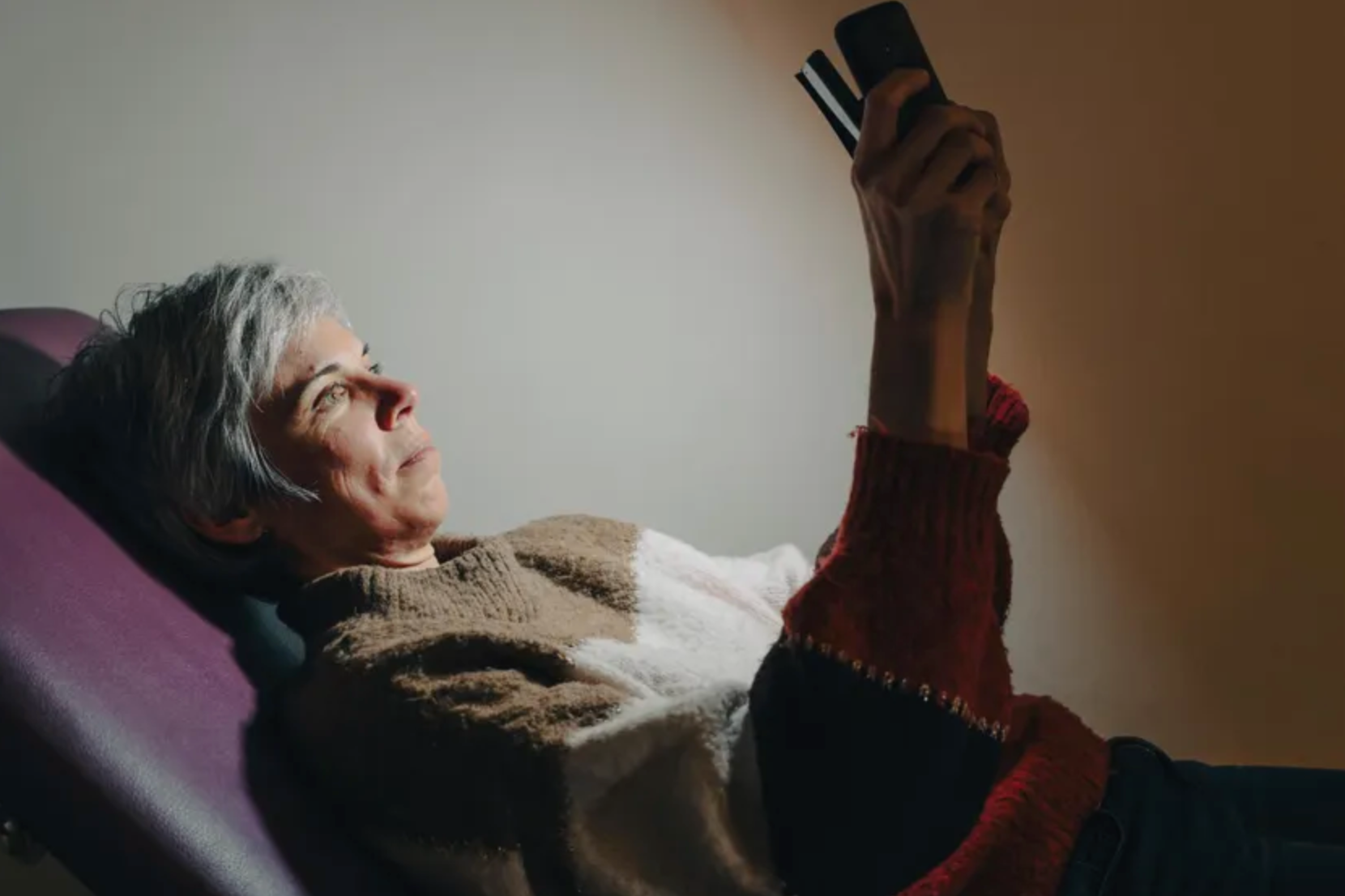
Servane Mouton is a neurologist and neurophysiologist. She co-chaired the commission on the impact of young people's exposure to screens, whose report, published in April 2024, provided a welcome overview of the situation, accompanied by policy recommendations ( Children and Screens: In Search of Lost Time ) . This report represented an important recognition of a subject too often hijacked by economic interests and their usual "scientific" mouthpieces, quick to polarize the debate in order to stifle it.
Despite the presence of industry representatives, the commission managed to reach a clear-eyed conclusion and make clear recommendations, including: no screens before age 3 and severely limited screen time between 3 and 6, no mobile phones before age 11 and no smartphones before age 13, no social media before age 15 – and thereafter only "ethical" platforms – and no screens in nurseries and preschools. By comparison, the associations belonging to the Attention collective are calling for, among other things, a ban on screens before age 5 and smartphones before age 15.
This work was a landmark in our struggle: for the first time, a scientific authority with a political mandate clearly recognized the existence of a major public health problem linked to screens and put tangible proposals on the table.
A necessary step now behind us.
With "Screens, a health disaster" , Servane Mouton continues this work, but this time speaks in her own name alone, in complete independence: "The statements made here are solely those of their author, who specifies that she has no conflict of interest".
Because almost a year has passed, and it is clear that we are still waiting for political measures that meet the challenges, that the hold of screens on our lives has grown and that its effects have worsened in all areas of human, social and environmental health.
Servane Mouton paints a new picture of the scientific reality of the problem. She methodically lists the worsening of the harmful effects of overexposure to screens, both on the physical and mental health of children (visual disorders, sedentary lifestyle, lack of sleep, obstacles to neurological and socio-emotional development), and on that of our environment and our economic model.
Such an observation cannot leave anyone indifferent. It resolutely calls for action: addressing parents as well as all citizens, regulators as well as industry representatives, the author reiterates the absolute necessity of making screens a subject of genuine public debate, not just scientific ones—a debate that science informs rather than overshadows, accompanied by concrete political measures: “To fuel these discussions, we need fair and informed information, much like the Hippocratic Oath we took. Knowledge to find or rediscover the power to act.”
As she forcefully and with integrity reminds us, "our children are not laboratory rats. They are playing and building their lives right now. Enough elements are in place to at least mobilize the precautionary principle."
This is precisely the challenge for the coming months: now that we have agreed on the urgent need to act, how can we protect our children from the scourge of our time? Servane Mouton aptly reminds us of the levers for action already identified at both the national level (disconnected public spaces, independent public prevention policies) and the European level (strengthening the DSA on captology, requirements for interoperability and unbundling, etc.). Among the proposed measures, we should note the call for the creation of a public endowment fund tasked with penalizing industry abuses and supporting independent prevention organizations.
Education, finally, is logically an area that urgently needs reform, through a clear-eyed reassessment of the supposedly indisputable "educational effectiveness" of digital technology: it is time to ban screens in class before the age of 8, to reduce them to the bare minimum before the age of 14, to strongly regulate "Digital Work Environments" (DWEs), to enforce the legal ban on smartphones in middle school, etc.
At a time when artificial intelligence is fueling an increasingly unbridled techno-solutionism, we must, more than ever , break free from this hypnotic trance and forge an alternative path to the one the "new" technological empires would impose upon us. As its title suggests, Servane Mouton's message is crystal clear, and her warning is of vital public interest. It is a powerful cry of alarm that we cannot ignore, and we join our voices to hers with strength and resolve: "We fervently hope for an awareness of this looming and already evident health disaster. It is not too late, but it is more than time."
Source: https://www.levelesyeux.com/
Partager:
Aggression, suicidal thoughts... Giving a smartphone before this age is a bad idea according to a study.
Screen Addicts Series - France Culture Podcast