
Disconews
Blog
To stay "connected".

Living without a smartphone in 2024: the story of a teacher who made that choice
Louis, 62, a geography teacher, has chosen to live without a smartphone. Between alternative organization and daily constraints, a portrait of an unconventional lifestyle.
Read moreabout Living without a smartphone in 2024: the story of a teacher who made that choice

The French sleep on average 6 hours and 50 minutes per night, well below recommendations. Specialists are advocating for sleep to become a public health issue, just like nutrition.

The Impact of Smartphones on Family and Marital Relationships
A France Inter broadcast explores how smartphones disrupt family and marital relationships, and suggests ways to ritualize and discipline their use.
Read moreabout The Impact of Smartphones on Family and Marital Relationships

Relationship phubbing: when your phone erodes your relationship
Psychoanalyst Christian Richomme analyzes phubbing, the behavior of ignoring one's partner for one's phone, and identifies four major consequences for a couple's life.
Read moreabout Relationship phubbing: when your phone erodes your relationship

A study reveals that 70% of respondents cannot do without their smartphone
A study of 20,000 people reveals that 70% of respondents cannot do without their smartphone, with impacts on physical and mental health.
Read moreabout A study reveals that 70% of respondents cannot do without their smartphone
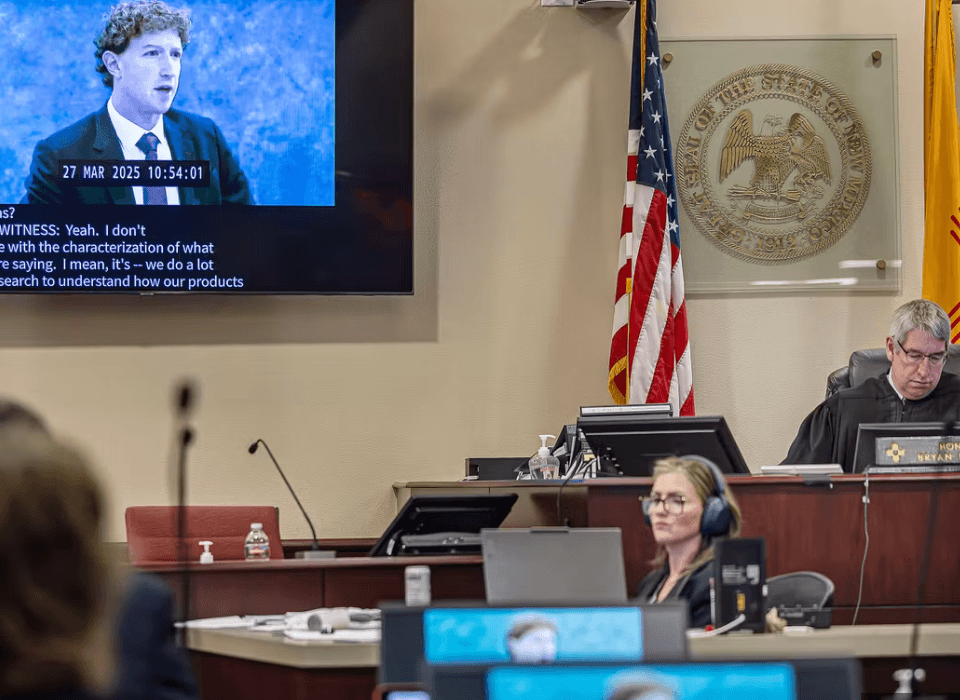
US: Meta and Google convicted of endangering minors
A US judge ordered Meta and Google to pay $6 million for endangering minors. Le Temps believes that only strong regulation can solve this public health problem.
Read moreabout US: Meta and Google convicted of endangering minors

Meta and Google’s unprecedented conviction sends shivers through Silicon Valley
A Los Angeles court has found Meta and Google liable for a teenager's social media addiction, a first in the United States that could pave the way for thousands of other lawsuits.
Read moreabout Meta and Google’s unprecedented conviction sends shivers through Silicon Valley

Young people facing digital addiction: mechanisms and potential regulations
Baptiste Detombe, 24, documents the addictive mechanisms of social networks in young people and proposes bank card access control before the age of 16.
Read moreabout Young people facing digital addiction: mechanisms and potential regulations

Forest schools as an antidote to children's digital overload
UNESCO documents the effects of screen overexposure in young people: between 5 and 9 hours daily in front of devices, with measurable impacts on cognitive and emotional development.This prolonged exposure leads to observable consequences: increased anxiety, body dissatisfaction, reduced attention span, decreased creativity, and sleep disturbances.
Read moreabout Forest schools as an antidote to children's digital overload